
How a ‘Prepared Environment’ at School Reduces Childhood Anxiety and Increases Focus
What is a Prepared Environment?
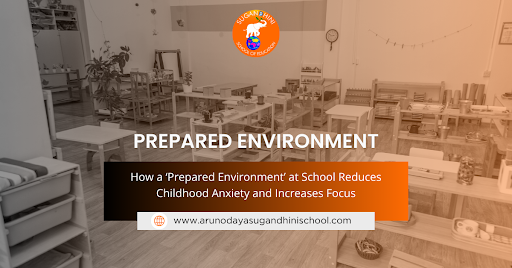
A Montessori prepared environment isn’t just a classroom setup it acts like a silent teacher. Every element is thoughtfully designed to create a calm, organized and child-centered space where nothing feels chaotic.
At its core, it is clean, structured, and accessible, allowing children to explore and learn independently. Research shows that such predictable environments improve emotional regulation and focus. It’s not about controlling children, but guiding them through design.
Just like a well-organized kitchen makes cooking easier, a structured classroom helps children feel secure, confident, and ready to learn, proving that the environment truly shapes behavior.
Core Principles Behind Montessori Classrooms
The philosophy behind a Montessori prepared environment revolves around a few powerful principles: order, independence and freedom within limits. These aren’t just buzzwords; they are the backbone of how children interact with their surroundings.
First, order and structure play a critical role. When materials are consistently placed and routines are predictable, children develop a sense of stability. Their brains don’t have to waste energy figuring out what comes next, which frees up mental space for learning.
Second, there’s freedom within limits. Children are given choices but not unlimited ones. This balance helps them feel empowered without becoming overwhelmed. It’s like offering a menu instead of an entire grocery store.
Finally, the environment is child-centered. Furniture is sized for children, materials are within reach, and activities are designed for hands-on learning. This encourages independence and reduces reliance on adults.
The result? A classroom where children don’t just learn they thrive emotionally and cognitively.
The Science Behind Childhood Anxiety in Schools
1. What Triggers Anxiety in Children?
Before we talk about solutions, let’s address the problem of reducing childhood anxiety in school and start with understanding what causes it. Anxiety in children often stems from unpredictability, overstimulation and lack of control.
Before we talk about solutions, let’s address the problem of reducing childhood anxiety in school and start with understanding what causes it. Anxiety in children often stems from unpredictability, overstimulation and lack of control.
Picture a traditional classroom: bright posters everywhere, loud noises, constant instructions, and pressure to perform. For many children, especially younger ones, this environment can feel overwhelming. Their brains are still developing the ability to filter information, so too much input can quickly turn into stress.
Studies in developmental psychology suggest that chaotic or cluttered environments increase distraction and anxiety levels in children . When children don’t know what to expect, their brains stay in a constant state of alertness.
This isn’t just about emotions it directly impacts learning. An anxious child is less likely to focus, participate, or retain information.
2. The Role of Environment in Emotional Regulation
Here’s where things get interesting: the environment doesn’t just influence behavior it actually shapes how children regulate their emotions.
A calm, structured classroom sends a message: “You’re safe here.” This sense of safety allows children to relax and engage with their surroundings. On the flip side, a chaotic environment signals unpredictability, which can trigger stress responses.
How a Prepared Environment Reduces Anxiety in Children
1. Order and Predictability Create Safety
One of the most powerful ways a prepared environment reduces anxiety is through order and predictability. Children thrive on consistency; it helps them make sense of the world.
In a Montessori classroom, everything has a designated place. Activities follow a rhythm. Transitions are smooth and expected. This consistency builds trust in the environment.
Think about it: when you know exactly where things are and what’s coming next, you naturally feel more relaxed. Children experience the same comfort.
This structured setup allows them to shift their focus from “What’s happening?” to “What can I learn?”
2.Minimalism Reduces Sensory Overload
Another key aspect is minimalism. Unlike traditional classrooms filled with bright colors and excessive decorations, a Montessori environment is intentionally simple.
Why does this matter? Because sensory overload is a major contributor to anxiety.
Research shows that noisy, cluttered environments can lead to distraction and behavioral issues in children . By reducing unnecessary stimuli, a prepared environment creates a calm atmosphere where children can think clearly.
It’s like the difference between working in a messy room versus a clean desk; the latter instantly feels more peaceful and manageable.
3.Freedom Within Limits Builds Confidence
Here’s a subtle but powerful factor: choice.
When children are constantly told what to do, they may feel pressured or helpless. But when they’re given structured choices, they feel in control.
In a prepared environment, children choose activities within a defined framework. This balance helps them develop confidence and independence.
And confidence is the opposite of anxiety.
How a Prepared Environment Improves Focus
1. Structured Choices Enhance Concentration
Focus isn’t just about discipline, it’s about engagement.
In a Montessori classroom, children aren’t forced into activities. Instead, they choose tasks that interest them. This intrinsic motivation naturally increases concentration.
When children are genuinely interested in what they’re doing, they enter a state of deep focus often called “flow.” This is where real learning happens.
2. Hands-On Learning Keeps Children Engaged
Let’s be honest, passive learning rarely works for young children.
A prepared environment emphasizes hands-on activities, allowing children to learn by doing. Whether it’s sorting objects, building structures, or solving puzzles, these activities keep their minds actively engaged.
This approach not only improves focus but also strengthens memory and understanding.
3. Reduced Distractions Boost Cognitive Performance
When distractions are minimized, the brain can fully concentrate on the task at hand.
A prepared environment eliminates unnecessary noise, clutter and interruptions. This creates the ideal conditions for sustained attention.
And over time, children develop the ability to focus for longer periods, a skill that benefits them far beyond the classroom.
Key Elements of a Montessori Prepared Environment
1. Child-Centered Design
Everything in the classroom is designed with the child in mind right from furniture size to material placement. This accessibility encourages independence and reduces frustration.
2. Organized Learning Materials
Materials are neatly arranged and easily accessible. Each item has a purpose, and children are taught to return it after use, reinforcing responsibility.
3. Calm and Aesthetic Spaces
Soft colors, natural light, and uncluttered spaces create a soothing atmosphere that supports both emotional well-being and focus.
4. Role of the Teacher as a Guide
Instead of directing every action, teachers observe and guide. Their calm presence helps children feel supported without being controlled.
Real Benefits Backed by Research
1. Emotional Stability and Self-Regulation
Studies indicate that children in well-structured environments show better emotional balance, empathy and self-regulation . These skills are essential for managing anxiety.
2. Improved Attention Span
Children in prepared environments often demonstrate higher levels of concentration and perseverance due to reduced distractions and meaningful engagement.
Practical Ways Schools Can Implement a Prepared Environment
Classroom Design Tips
- Keep the classroom organized and clutter-free
- Use natural lighting and soft colors
- Arrange materials at child height
- Limit unnecessary decorations
Daily Routine Structuring
Consistency is key. Establish predictable routines while allowing flexibility for exploration.
Challenges and Misconceptions
Is It Too Restrictive or Too Free?
Some believe Montessori environments are either too rigid or too loose. In reality, they strike a balanced structured freedom.
Can It Work in Traditional Schools?
Absolutely. Even small changes like reducing clutter or improving organization can significantly impact anxiety and focus.
Conclusion
A Montessori prepared environment goes far beyond aesthetics; it is rooted in psychology, neuroscience, and an understanding of human behavior. By designing spaces that are calm, structured and child-centered, schools can effectively reduce anxiety and enhance focus among children.
It’s a simple yet powerful idea: when the environment supports the child, learning becomes natural.
More Posts

Screen Time Effects on Child Speech: Interactive or Passive?
Screen Time Effects on Child Speech: Interactive or Passive? If

Best Preschool in Bellary: Why Arunodhaya Sugandhini Is the First Choice for Early Childhood Education
Best Preschool in Ballari: Why Arunodhaya Sugandhini School Of Education

Co-Scholastic Activities Explained: Why Art, Music and Movement Belong in Every Preschool Day
Co-Scholastic Activities Explained: Why Art, Music and Movement Belong in

4 Simple, Everyday Toys That Unlock Advanced Spatial Problem-Solving in Early Childhood
4 Simple, Everyday Toys That Unlock Advanced Spatial Problem-Solving in