
What to Look for in a School: A Checklist for First-Time Parents
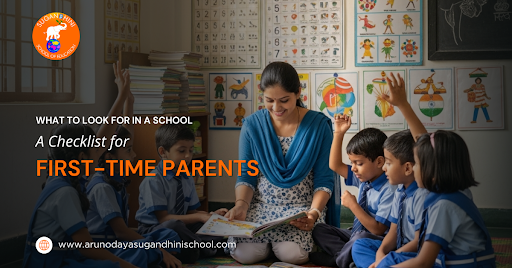
This guide is your complete school selection checklist, focusing on what truly matters: safety, teacher-student ratios, and extracurricular activities especially for kindergarten.
1. Early Education Shapes Lifelong Learning
The early years of a child’s life are like wet clay, easily shaped, deeply impressionable, and full of potential. Kindergarten is not just about learning ABCs and 123s; it’s where curiosity is nurtured and confidence begins to bloom. Research shows that early childhood education significantly impacts cognitive, social and emotional development, laying the groundwork for future academic success .
As a parent, you’re not just selecting a school you’re choosing a launchpad for your child’s future. A good kindergarten introduces children to structured learning while still preserving the joy of play. It teaches them how to interact, share, and express themselves. That’s why understanding what to look for in a school becomes crucial at this stage.
2. Emotional and Social Development Foundations
Children don’t just learn from books they learn from experiences, interactions, and environments. A nurturing kindergarten helps them develop emotional intelligence, empathy and social skills. Imagine a place where your child feels safe to ask questions, make mistakes and try again. That’s the kind of environment you should aim for.
A school that prioritizes emotional well-being creates confident learners. It’s like planting a seed in fertile soil. Growth becomes inevitable.
3. School Safety: The Non-Negotiable Factor
1. Physical Safety Infrastructure
When it comes to your child, safety is not up for debate, it’s the baseline. Studies show that a safe school environment is directly linked to better academic performance and emotional well-being . So, what should you check?
-
CCTV, Secure Entry, and Surveillance:
A good kindergarten should have controlled entry and exit points. CCTV cameras in classrooms, hallways and play areas add an extra layer of security. Think of it as a silent guardian always watching, always protecting.
-
Emergency Preparedness
Ask yourself: Is the school prepared for emergencies? Fire drills, first-aid kits, trained staff and evacuation plans are essential. A school that takes safety seriously will have clear protocols in place.
2. Emotional Safety and Bullying Policies
Physical safety is just one part of the equation. Emotional safety matters just as much. Children should feel respected, heard, and valued. Schools must have anti-bullying policies and trained staff to handle conflicts gently and effectively.
A child who feels emotionally secure learns better; it’s that simple.
4. Teacher-Student Ratio: Why It Matters More Than You Think
1. Ideal Ratios for Kindergarten
Here’s something many parents overlook: the teacher-student ratio. But this single factor can dramatically affect your child’s learning experience.
Globally, the average ratio in pre-primary education is about 13 children per teacher . However, many experts recommend even smaller ratios for kindergarten to ensure better attention and care.
2. Impact on Individual Attention
Imagine a classroom with 30 kids and one teacher. Sounds chaotic, right? Now picture a class with 10–15 children. Suddenly, everything feels calmer, more focused, more personal.
- More individual attention
- Better classroom management
- Stronger teacher-child relationshipss
- Improved emotional support
Research also shows that smaller ratios lead to more meaningful interactions, boosting cognitive and emotional development .
So when you’re using your school selection checklist for parents, this should be high on your priority list.
5. Quality of Teachers and Teaching Approach
1. Qualifications and Training
A school is only as good as its teachers. Look beyond degrees focus on experience, certifications in early childhood education and continuous training. Teachers should understand child psychology, not just textbooks.
2. Teaching Style and Engagement
Is the teaching interactive or rigid? Do teachers encourage questions? Are activities hands-on?
Children learn best when they’re engaged. A good teacher doesn’t just teach, they inspire. They turn lessons into stories, concepts into games and classrooms into playgrounds of imagination.
6. Extracurricular Activities in Schools
1. Importance of Co-Scholastic Development
Let’s be honest, education isn’t just about academics anymore. Skills like creativity, teamwork, and communication are equally important.
Schools that offer strong extracurricular activities in schools help children develop holistically. In fact, students in smaller and well-equipped schools tend to participate more in such activities and feel a stronger sense of belonging .
Types of Activities to Look For
Look for a variety of activities such as:
- Music and dance
- Art and craft
- Sports and physical play
- Storytelling and drama
These activities are not “extras” ; they’re essential for building confidence and creativity.
7. Infrastructure and Learning Environment
1. Classroom Design and Hygiene
Would you feel comfortable leaving your child in that classroom? That’s the question you need to ask.
Clean, well-lit, and ventilated classrooms create a positive learning atmosphere. Child-friendly furniture, colorful walls and organized spaces make learning enjoyable.
2. Play Areas and Facilities
Play is not a break from learning, it is learning. Safe outdoor play areas, indoor activity zones, and creative spaces are crucial for kindergarteners.
8. School Culture and Values
1. Communication with Parents
A good school treats parents as partners. Regular updates, parent-teacher meetings, and open communication channels are signs of a transparent and supportive environment.
2. Inclusivity and Child-Friendly Policies
Every child is unique. Schools should celebrate diversity and adapt to different learning needs. Inclusivity isn’t just a policy, it’s a mindset.
9. Location, Transport and Accessibility
A school may be perfect on paper, but if it’s too far, it can become exhausting for your child. Look for convenient transport options, safe buses, and reasonable travel time.
Remember, long commutes can drain energy and reduce enthusiasm for learning.
10.Final Checklist for Parents Before Choosing a School
Before making the final decision, ask yourself:
- Is the school safe physically and emotionally?
- What is the teacher-student ratio?
- Are there enough extracurricular activities?
- Do teachers seem caring and qualified?
- Is the environment clean and child-friendly?
If the answer is “yes” to most of these, you’re on the right track.
Conclusion
Choosing a kindergarten isn’t about finding the “best” school, it’s about finding the right fit for your child. Every child is unique, and what works for one may not work for another.
By focusing on safety, teacher-student ratios, and extracurricular opportunities, you’re already covering the most important factors. Trust your instincts, visit schools, ask questions, and observe closely.
At the end of the day, a good school should feel like an extension of your home, a place where your child feels safe, happy and excited to learn.
More Posts
Screen Time Effects on Child Speech: Interactive or Passive?
Screen Time Effects on Child Speech: Interactive or Passive? If
Best Preschool in Bellary: Why Arunodhaya Sugandhini Is the First Choice for Early Childhood Education
Best Preschool in Ballari: Why Arunodhaya Sugandhini School Of Education
Co-Scholastic Activities Explained: Why Art, Music and Movement Belong in Every Preschool Day
Co-Scholastic Activities Explained: Why Art, Music and Movement Belong in
4 Simple, Everyday Toys That Unlock Advanced Spatial Problem-Solving in Early Childhood
4 Simple, Everyday Toys That Unlock Advanced Spatial Problem-Solving in