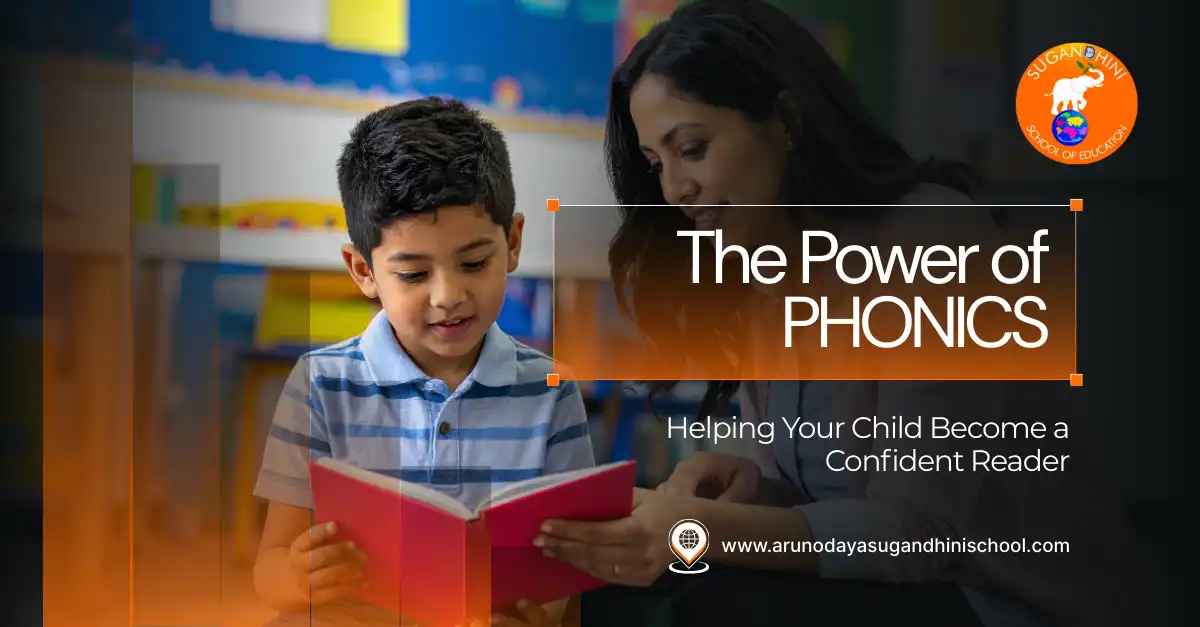
If reading feels like a daily struggle for your child, you’re not alone and more importantly, it’s not permanent. For parents of Grade 1 and 2 students, literacy is often the number one concern. Will my child read fluently? Will they enjoy books? Will they fall behind?
This is where phonics based reading steps in like a trusted guide. Instead of guessing words or memorizing entire sentences, phonics teaches children how reading actually works. And when children understand the “how,” confidence naturally follows.
1.Why Reading Confidence Matters in Early Grades
1.1 The critical learning window in Grades 1 & 2
Grades 1 and 2 are often called the make-or-break years for literacy. According to early education research, children who do not develop strong reading skills by the end of Grade 2 are four times more likely to struggle academically later.
Reading confidence at this stage doesn’t just affect English it influences performance across all subjects.
1.2 How confidence shapes lifelong learners
Confident readers:
- Participate more in class
- Ask questions without fear
- Explore books independently
When reading feels achievable, learning feels exciting rather than intimidating.
1.3 What Is Phonics-Based Reading?
Breaking down sounds, letters and words
Phonics-based reading teaches children how letters and groups of letters represent sounds. Instead of memorizing words like visual symbols, children learn to decode them.
Think of phonics as teaching your child the alphabet’s “secret code.”
Breaking down sounds, letters and words
2.How Children’s Brains Learn to Read (Science Matters)
1.1 The sound–symbol connection
The human brain is not naturally wired to read. According to neuroscience research, reading develops when children learn to connect sounds (phonemes) with letters (graphemes) exactly what phonics focuses on.
1.2 Stats & facts that matter
- The National Reading Panel found that children receiving systematic phonics instruction showed up to 30% higher reading accuracy.
- A Stanford University study revealed that phonics strengthens neural pathways responsible for language processing.
- UNESCO reports that literacy skills developed before age 7 strongly predict academic success up to age 15.
In short, phonics builds the brain’s reading “muscle.”
1.3 Benefits of Phonics for Early Readers
The benefits of phonics for early readers go far beyond reading aloud.
3.Why Schools Are Returning to Phonics-Focused Instruction
1.1 Addressing learning gaps early
Many schools now recognize that guessing-based reading leaves gaps. Structured phonics helps close those gaps before they widen.
1.2 Evidence-backed success
- Schools using phonics programs report up to 40% fewer reading difficulties by Grade 2
- UK education studies show phonics-trained students outperform peers for six consecutive years
- Early phonics intervention reduces long-term reading struggles by nearly 50%
This is why phonics & language skills are increasingly offered as a specialized school add-on.
4. How Phonics Builds Reading Confidence
1.1 From “I can’t” to “I can
Each successfully decoded word reinforces belief. Confidence grows word by word.
1.2 Independence through decoding
Children stop waiting for help and start trusting their skills, an essential shift for lifelong learning.
5. Phonics & Language Skills as a School Add-On
1.1 Why structured phonics matters
A dedicated phonics program ensures:
- Consistent progression
- No gaps in sound recognition
- Strong reading foundations
1.2 Classroom learning + home reinforcement
When schools and parents align, results multiply.
6. Phonics Strategies for Parents at Home
These phonics strategies for parents are simple, effective and pressure-free.
1.1 Simple daily phonics routines
- Practice letter sounds, not just names
- Blend sounds together aloud
- Read short phonics-based books
These phonics strategies for parents don’t need fancy tools, just consistency.
1.2 Making phonics fun, not forced
Use games, magnetic letters and silly sentences. Laughter boosts learning.
7. Everyday Activities That Strengthen Phonics Skills
1.1 Reading aloud the smart way
Pause. Let your child sound out words. Encourage effort over speed.
1.2 Games, songs and storytelling
Songs, tongue twisters and silly rhymes sharpen sound recognition naturally.
8. Long-Term Impact of Strong Phonics Skills
1.1 Beyond reading
- Confident readers perform better in math and science
- Strong literacy improves problem-solving
- Communication skills improve naturally
1.2 Stats that say it all
- Confident Grade 2 readers are 4x more likely to graduate on time
- Literacy confidence directly correlates with classroom participation
9. Supporting Your Child Without Pressure
1.1 Encouragement over comparison
Every child learns differently. Progress beats perfection.
1.2 Create a safe reading space
Comfort + consistency = confidence.
11. Final Thoughts for Parents
Phonics-based reading isn’t about drilling, it’s about empowering young minds. With structured guidance at school and gentle reinforcement at home, your child can grow from a hesitant reader into a confident one.
At
Arunodaya Sugandhini , we believe that small steps taken today lay the foundation for a lifetime of confident, joyful reading.